
Updating your will
We review your existing will, advise you on exactly what needs to change, and prepare the new will or codicil for you to sign correctly.
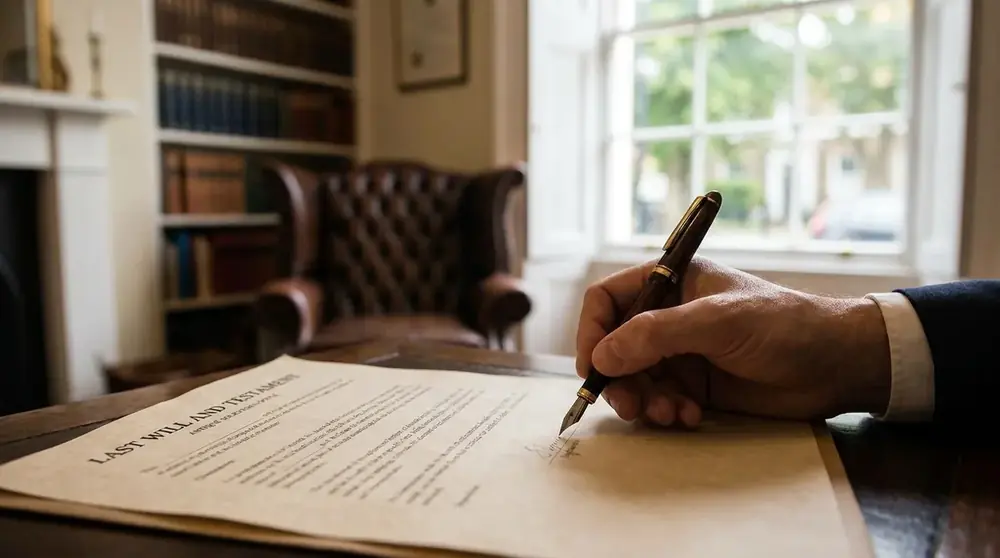
How we update your will
- Your existing will. Bring us a copy, or tell us where the original is held. If we already hold it in our storage, we will retrieve it for you.
- A review meeting. We go through the will with you and talk about what has changed in your life, your family and your finances since you signed it.
- Our advice. We tell you whether a codicil or a new will is the right answer, and confirm the fee in writing before any work begins.
- Drafting. We prepare the codicil or new will and send you the draft to check.
- Signing. We arrange for it to be signed and witnessed correctly, which is essential for it to be valid.
- Safe keeping. We can hold the original in our secure storage, and deal with your previous will as you instruct.

From our specialistUpdating a will is quick with the right adviser. With more than thirty years in the legal profession, I can tell you straight away whether a short codicil or a new will is right, so it costs no more than it needs to.”
Arrange a review
Codicil or new will?
A codicil is a short, formally signed document that changes part of your existing will, for example replacing an executor or changing a single gift. It works well for one simple change.
A new will is usually the better choice where several things have changed, where the change affects who inherits, or where earlier codicils already exist. One up to date document is clearer for your executors and leaves less room for doubt.
We will recommend the simplest option that does the job properly.
Why keeping your will up to date matters
A will reflects your life on the day you sign it. We recommend a review every three to five years, and always after a significant change, such as:
- Marriage or civil partnership, which usually revokes an existing will in England and Wales.
- Divorce or dissolution, after which your former spouse is treated as having died before you for the purposes of the will.
- A new child or grandchild, or the need to appoint or change guardians.
- The death of an executor or beneficiary.
- Buying or selling a home, or a significant change in your finances.
- Starting, selling or retiring from a business.
For more on this, read our guide: why keeping your will up to date matters after big life events.
Please do not alter your will yourself
Crossing out names or writing changes on a signed will does not change it. Alterations made after signing are not valid unless they are properly signed and witnessed, and they can call the validity of the whole will into question. If something needs to change, speak to us first.
Cost
The fee depends on what needs to change. A codicil usually costs less than a new will. We will confirm the fee in writing before any work begins, so you know exactly where you stand.
Frequently asked
Do I need a new will, or will a codicil do?
Can I just write the changes on my existing will?
I have just married. Is my old will still valid?
My will was not written by Brewer Wallace. Can you still update it?
How much does it cost to update a will?
How long does it take?
Related services
Will Writing
Single wills, mirror wills and wills with trusts, drafted to reflect your circumstances.
Read more →Lasting Powers of Attorney
Choose who can make decisions for you if you ever become unable to.
Read more →Trusts
Trusts within your will, and protecting assets for the people you care about.
Read more →Arrange a review of your will
Tell us what has changed and we will advise you on the right way to update your will.
SRA regulated · Law Society WIQS accredited · Offices in Hull, Bridlington and Hornsea